
Skip to content
Modular IT Capacity, Connected for Growth

When Internal IT Capacity
Isn’t Enough: Six Signs
Your IT Workforce Model
Needs to Evolve

By Alba Garza, Vice President of Professional Services

The most effective IT leaders don’t think about workforce planning as a choice between hiring internally or outsourcing. They build a workforce model that can expand, contract and add specialized expertise as business priorities change.

A strong team can still have a talent constraint

The strength of an IT organization is not determined only by the talent it employs. It is also determined by how effectively it can access additional expertise when priorities, timelines and technical requirements change. Technology demands keep expanding faster than internal teams can grow, and adding permanent headcount isn’t always fast enough, or the right fit, for the need in front of you.

The goal isn't to replace the internal team. It's to build a workforce model that lets the internal team and the business keep moving when priorities, timelines, or technical requirements shift. That’s a matter of IT workforce planning and organizational readiness.

The following six signs can help determine when a talent constraint has moved from manageable to something that deserves a more deliberate response.


Sign 1: An Expertise Gap

Strategic IT initiatives keep slipping because the right expertise isn’t available.

An initiative can have executive support, funding, and a clear business case and still stall because the organization lacks one specific technical capability. It's not unusual for projects to be delayed because of a lack of expertise in cloud architecture, Oracle ERP, cybersecurity, application modernization, or data engineering. In Oracle Cloud specifically, the senior and architect/SME-level professionals these initiatives depend on, typically with more than a decade of experience, are in high demand. Global research from ManpowerGroup found that 73% of Tech employers struggle to find the talent they need, with the scarcity concentrated in exactly these highly skilled roles.

The cost of that shortage extends well beyond an open position. A delayed cloud migration can prolong infrastructure costs, and an unfinished security initiative can extend exposure. A postponed application project can delay revenue or operational improvements the business expected months earlier. The longer the delay, the wider the competitive gap.

expertise gap in internal IT capacity

This is where the duration of the need matters. A contractor can be a strong fit for a defined initiative with a clear endpoint, while a direct hire may make more sense when the capability will remain strategically important after the project is complete. Working with a partner that has access to internal technical experts can help you identify skill gaps and validate a candidate's capabilities. They can provide the right expertise faster and keep your strategic initiatives on track.

Diagnostic: Which approved initiatives would move forward if the right specialist were available today?

Sign 2: A Capacity Work-Allocation Problem

The team is maintaining the business but can’t advance its priorities.

Sometimes the organization has the right expertise, but it doesn't have enough of it. In many organizations, experienced IT employees spend so much time maintaining existing systems, resolving support requests, and responding to urgent issues that strategic work continually gets pushed aside. Project backlogs grow from quarter to quarter. Senior employees handle work that could be delegated. Meanwhile, documentation and knowledge transfer get pushed down the road. Overtime becomes increasingly common.

In a TEKsystems survey of nearly 600 technology and business leaders, nine in ten organizations said they lacked the talent needed to succeed with digital transformation. The pressure hasn't eased: 65% of technology hiring managers tell Robert Half that finding skilled talent is harder than it was a year ago.

The challenge in this situation may be that valuable expertise is being consumed by work that prevents employees from applying it where the business needs it most.

Capacity modules unlock the roadmap in IT management

That can also create a retention problem over time. Highly skilled employees generally want opportunities to solve meaningful problems and develop their capabilities. If senior technical staff spend extended periods working through routine backlogs because there is no one else available, frustration can grow alongside the workload.

The business should be using your team’s time where they deliver the most value, regardless of how busy they are. Contract resources that take on defined responsibilities or add project capacity tend to fit this situation well. Look for a partner that has multiple recruiters who can shift capacity as needed to adjust with your changing needs.

Diagnostic: What higher-value work could your internal team complete if additional capacity were available?

Sign 3: A Temporary Specialized Need

You need specialized expertise, but the need may not be permanent.

Not every critical need should turn into a permanent position. A migration, implementation, integration, audit, remediation effort, or temporary demand spike can require highly specialized skills for a defined period. Just because it’s temporary doesn’t mean it’s less important. Short-term initiatives can have the largest business impact of anything on the roadmap. Beyond cost savings, the value is quick access to the right subject matter expert for exactly as long as the work requires.

What we see from our clients is a placement need of Oracle Cloud professionals that span from entry through SME levels specifically for project-based engagements like these, where contract IT professionals aligned to a project, workload, or timeframe make more sense than a permanent hire.

temporary specialized needs in IT management

This approach can also give internal teams access to deeper specialization than they could reasonably maintain year-round. An organization may need a particular cloud architect, security specialist, or ERP expert intensely for six months without needing that same level of specialization indefinitely.

Diagnostic: Will the organization still need this level of capacity or specialization once the strategic initiative wraps?

Sign 4: A Vacancy with Growing Business Consequences

An important IT position has stayed open longer than the business can afford.

Time-to-fill is useful, but cost of vacancy is often the more important measure.

An unfilled technical role can affect project delivery, service quality, employee workload, security posture, and revenue-producing initiatives simultaneously. The position remains open while somebody else does the work, which can create a second capacity problem inside the existing team.

Internal recruiting teams can be highly capable and still struggle with specialized technical roles. They may recruit for dozens of business functions and lack the networks or technical screening expertise needed for a narrow Oracle, cloud, data, or security position.
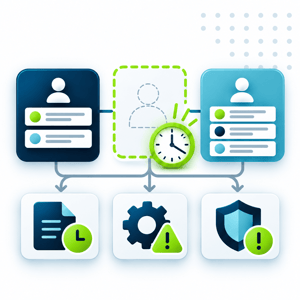
cost of an open role in IT management

An IT talent partner can extend that reach while adding technical screening informed by domain expertise. The right partner will recruit daily for its internal teams, projects, and clients, so they’ll have firsthand insight into talent availability and pay expectations. They’ll perform video interviews, resume validation, technical vetting, and fit assessments to help present a few well-qualified candidates and respect the client’s time.

The engagement model should reflect the actual need. Direct hire makes sense when the position is clearly permanent. Contract-to-hire can work when immediate support is necessary but the organization wants more time to evaluate long-term fit.

Diagnostic: What is the organization postponing, or asking others to add to their workload, while this role stays vacant?

Sign 5: A Workforce Plan Overtaken by Business Change

Business change has altered your talent requirements faster than your workforce can adjust.

Some changes come from the business: an acquisition, expansion into a new market, a major customer win, or a regulatory deadline. Others come from technology itself: a new platform implementation, a cybersecurity event, or a shift in cloud or application strategy. Any of them can change an organization's technology requirements almost overnight. Traditional hiring plans often don't progress at the speed needed to fill roles requiring several specialized skills at once. An IT talent partner helps the organization build capacity around the event itself, without forcing leaders to predict every permanent role before they fully understand the scope.

Project-based augmentation, skill-based augmentation, and temporary contract models exist specifically for scenarios like this, and the right fit is often a mix of contractors and direct hires depending on which capabilities turn out to be transitional.

Diagnostic: Has the business changed faster than the current workforce plan accounts for?

business changes outpace hiring in IT management

Sign 6: An Unclear or Undefined Permanent Role

You need more confidence before making a permanent hiring decision.

Positions can evolve after they've been created. An organization may be standing up a new technical function, defining responsibilities for a new role, or determining how much specialization it will actually require. Leaders may know they need help today without yet having enough information to define the permanent position accurately. In some cases, the cost of getting a permanent hire wrong would also be substantial, both in time lost and in disruption to the team.

Contract-to-hire can provide immediate capacity while giving both sides an opportunity to understand the role in a real working environment. That makes it a mutual evaluation period. The organization gets to assess technical ability, collaboration, and how the role fits into the broader team. The professional gets a clearer view of the responsibilities, culture, and long-term opportunity.


Magnifying glass clarifies a professional role in IT management

That additional information can make a permanent hiring decision considerably more informed.

Diagnostic: Is the organization confident it understands both the long-term role and the qualities required for success in it?

Not every talent constraint requires the same response

Recognizing a sign is only half the work. Matching it to the right IT staffing model allows you to actually resolve it. Consider the duration of need, strategic importance, urgency, internal management capacity, and accountability for delivery.

If the need is...

Consider...

A skill the team will use consistently over time

Upskilling current staff

Permanent and central to the organization

Direct hire

Immediate, with a possible permanent future

Contract-to-hire

Specialized, temporary, or project-based

Contract IT professionals

Ongoing work you want another provider to fully own

Managed services


Managed services are worth considering if you want a provider to own outcomes. IT staff augmentation puts skilled people under your direction, while your team still owns the work and the outcome. Managed services shift ownership of a defined outcome to the provider itself. Staff augmentation and managed services offer different approaches to accessing expertise and assigning responsibility for delivery. The right choice depends on how much control the organization wants to keep.

Whether you need specialized expertise for a defined initiative, additional capacity for your internal team, or help filling a permanent role, a provider can help you determine the right talent model.

Build access to talent into workforce planning, not just job requisitions

When IT priorities stall, leaders need to understand what is limiting progress before deciding how to respond. Lack of expertise, competing demands, and an undefined role each call for a different workforce decision. Effective planning considers which capabilities to develop and retain internally, where temporary expertise can help, and when to assign responsibility for a defined service to a provider.

Making those decisions deliberately while establishing clear expectations for delivery and knowledge transfer helps organizations meet immediate needs while strengthening their ability to support future business priorities.

What an IT talent partner should contribute beyond filling a requisition

The quality of a talent partner is demonstrated not only by how quickly it presents candidates, but by how well it understands the business need behind the role. A strong partner brings access to specialized technology talent that internal recruiting may never reach on its own, real technical and professional screening, multiple engagement models under one relationship, speed without sacrificing candidate quality, and honest guidance on talent availability and compensation instead of telling you what you want to hear.

We at Buchanan run a defined 10-step vetting and placement process, hold Oracle partner status across multiple specializations, and maintain SOC 2 Type 2 and ISO 27001 certifications. None of that replaces understanding the actual business problem behind a request, but it’s the operational foundation that makes fast, accurate placement possible.

Whether you’re facing one of these six signs right now or building a workforce strategy that can flex the next time something changes, Buchanan can help you determine the right talent model for where your organization stands. Explore IT Talent Solutions.

Contributing Author:

20260804_alba_garza_bio_headshot_570x570

Alba Garza
Vice President of Professional Services

Where Are You Today?
‌
Where Can You Be Tomorrow?

If you're ready to build a flexible IT workforce strategy that scales with your business, book a call with the Buchanan team today.